Lucerne sells three day trips to the same customer. Pilatus, Rigi and Titlis all promise a summit, all take most of a day, and all cost money on top of whatever rail product you already carry. Most guides rank them by view. That is not the decision. The decision is the weather that morning, what your discount card actually covers, and how much of the day the mountain takes from the rest of the trip.
We had one clear morning in Lucerne on Day 3 and spent it on Pilatus. Day 2 covers the ride in and what the Lucerne Visitor Card actually pays for. Here is how that choice got made, what it cost with a Swiss Half Fare Card, and the booking error later the same day that is the more useful story of the two.
Why Pilatus won, and what we cannot tell you
We picked the mountain the night before, off the webcam. That is the whole method. Book the hotel late, watch pilatus.ch, and commit to the summit only once the camera shows the top is clear. It bought us two perfect summit mornings on this trip, and it is the only weather strategy that survives non-refundable mountain tickets.
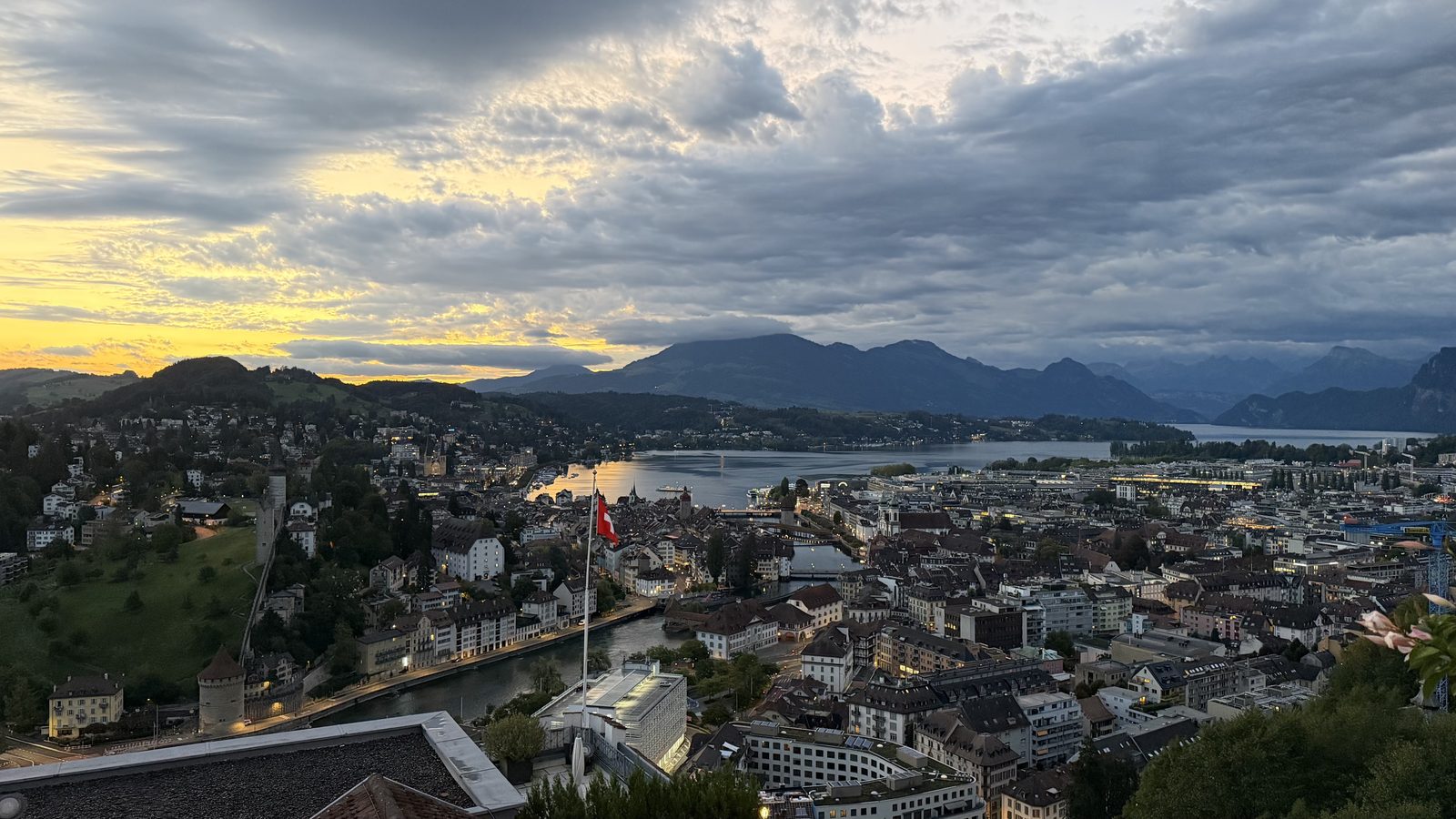 Lucerne before sunrise on Day 3. Cloud over the town, clear above it, which is exactly the morning the webcam is for. Photo: RewardsGuru.club
Pilatus also has the thing the other two do not. The cogwheel railway is the steepest in the world at a 48 percent gradient. That is not a view, it is the ride itself, and it is the reason to pick this mountain over a cable car to a similar altitude. The summit is 2,132 m.
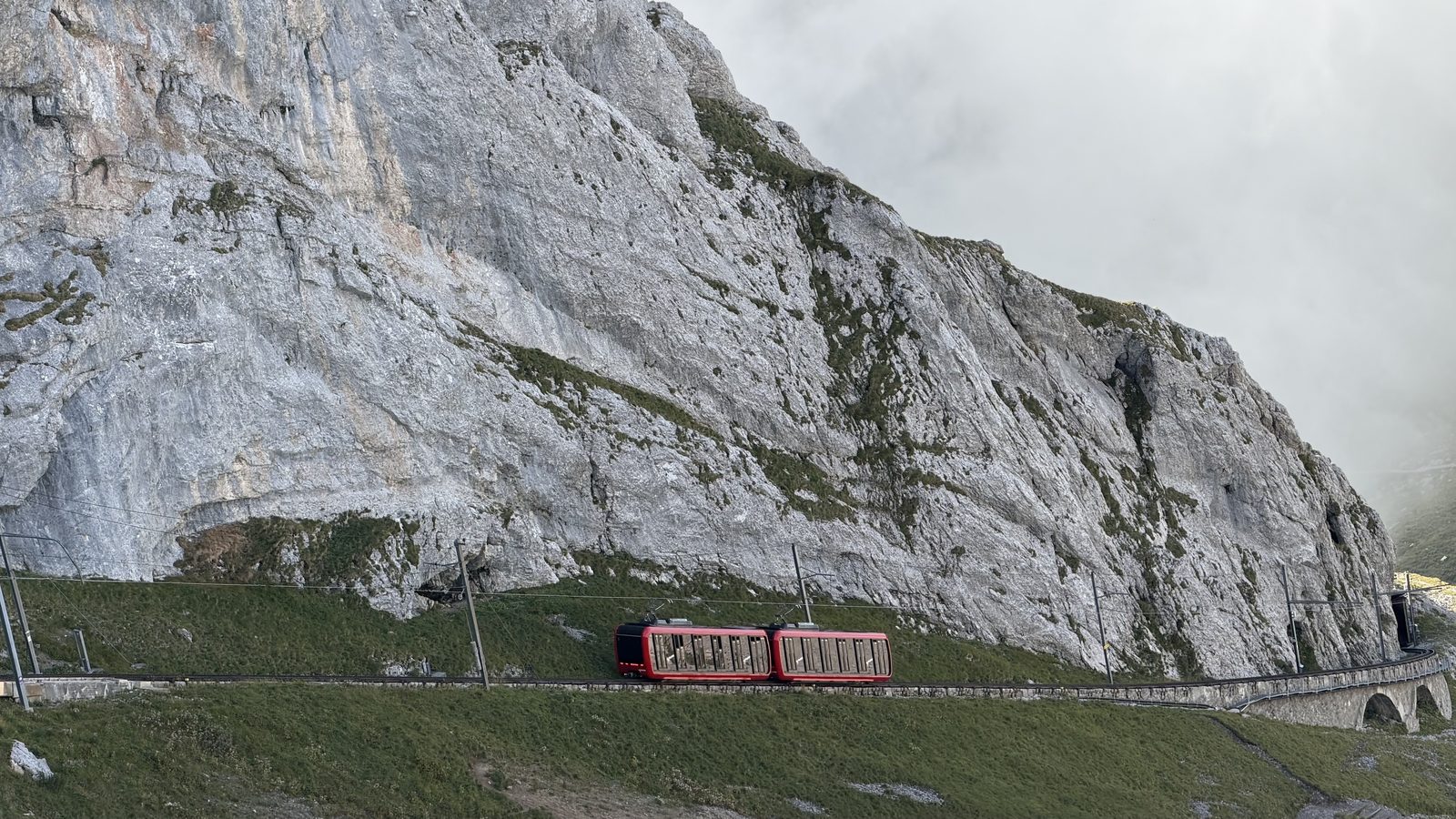 The cogwheel on the Pilatus face. Forty-eight percent at its steepest, which is the ride rather than the view. Photo: RewardsGuru.club
The limit of this piece, stated plainly: we did not ride Rigi or Titlis and did not price them on the day, so we are not publishing a comparison we did not run. What we have is one mountain with its receipts.
What the morning ran to
We were on the 8:10, the first cogwheel of the day. The first departure matters more on a mountain than almost anywhere else. Better light, emptier summit, and if the weather turns by lunchtime you have already been up.
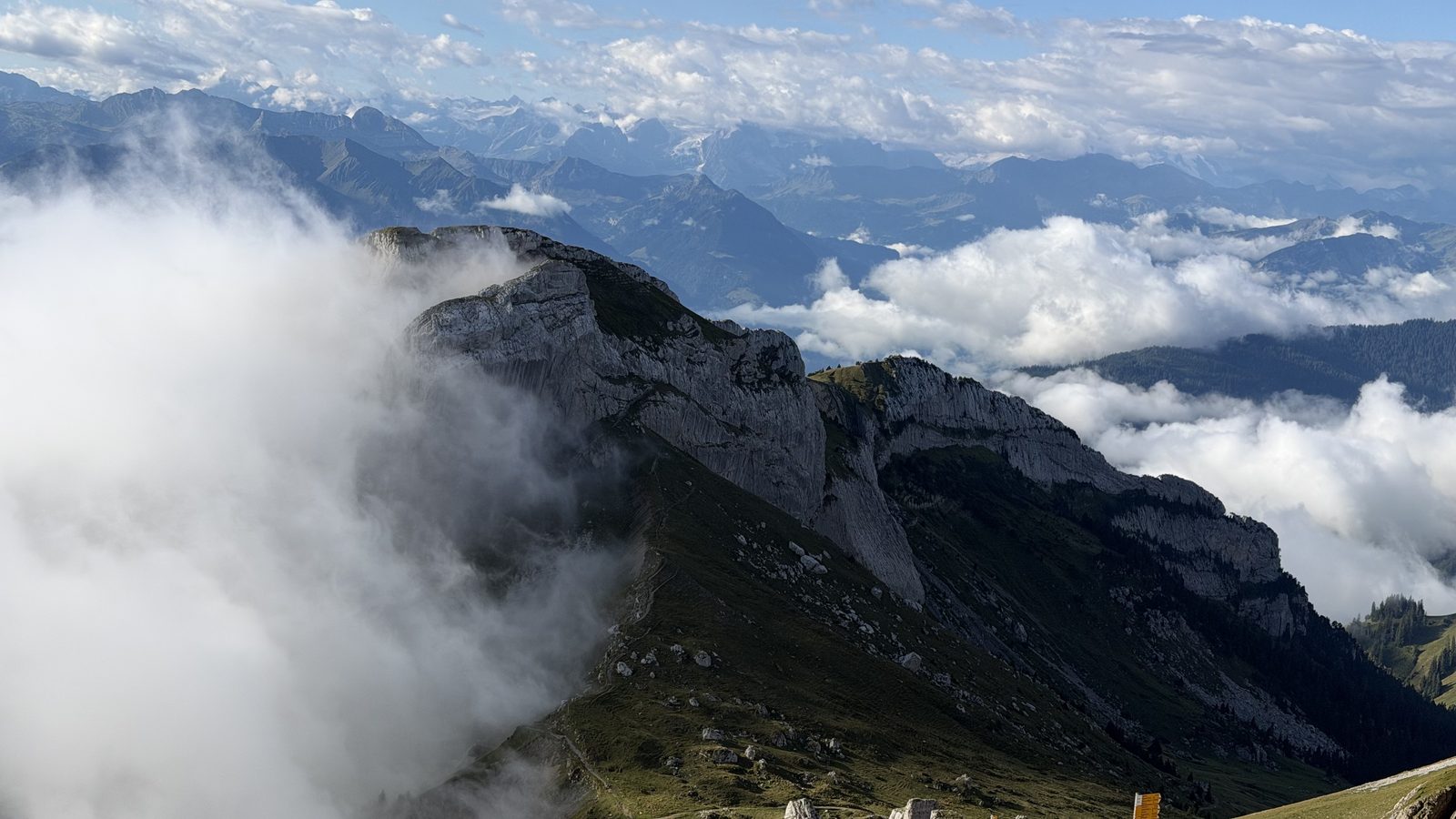 The first cogwheel of the day puts you above the cloud instead of inside it. Photo: RewardsGuru.club
| Summit | Pilatus, 2,132 m |
| First cogwheel | 8:10 |
| Gradient | 48 percent, the world's steepest cogwheel |
| Pilatus tickets, two people, with Half Fare | Half price, which is the card doing its job |
| Aug 30 and Aug 31 point to point rail tickets, half fare | about CHF 224 for both days combined |
| Saver Day Pass for Aug 31 | not bought |
That last line is the one worth copying. The Saver Day Pass is dynamically priced, so it only wins when it beats your half fare point to point total for that specific day. On Day 3 it came out at CHF 182 per person against roughly CHF 110 of tickets, so we skipped it. On Day 5 the same product priced at CHF 99 per person against CHF 118 of tickets, so we bought it. Same trip, same two people, opposite answers two days apart.
The Half Fare Card itself was $370 for two, and it is what makes the rest of the maths work. Across the whole trip it beat the Swiss Travel Pass Flex for our route, all in first class. We are not printing that comparison as a dollar figure, because the answer turns entirely on your route, your days and your class, and a number from our itinerary would only be useful to someone travelling ours.
Two rules about how to buy all of this, which apply well beyond Pilatus.
The Half Fare Card is the one Swiss rail product that is almost always worth buying. It halves point to point tickets, it halves most mountain railways, and unlike a day pass it does not have to win an argument every morning. If you are in Switzerland more than a few days and doing any mountains at all, buy it first and build the rest of your decisions around it.
And do not assume the SBB app is the only place to buy. For mountains in particular, the operator's own site and ticket counter carry options the SBB cart never showed us: combination tickets that cover a gondola and a cogwheel on one fare, a return rebuilt to go up one valley and down another, a paid seat reservation on a busy summit morning. SBB is the right tool for trains between towns. For the mountain itself, price it on the mountain's own site before you buy.
The one Pilatus rule that costs people money
The seat slot on the cogwheel is changeable up to 30 minutes before departure and never cancellable. The ticket itself is valid for the day. The slot is a reservation, not the fare, so losing a slot is not losing the mountain.
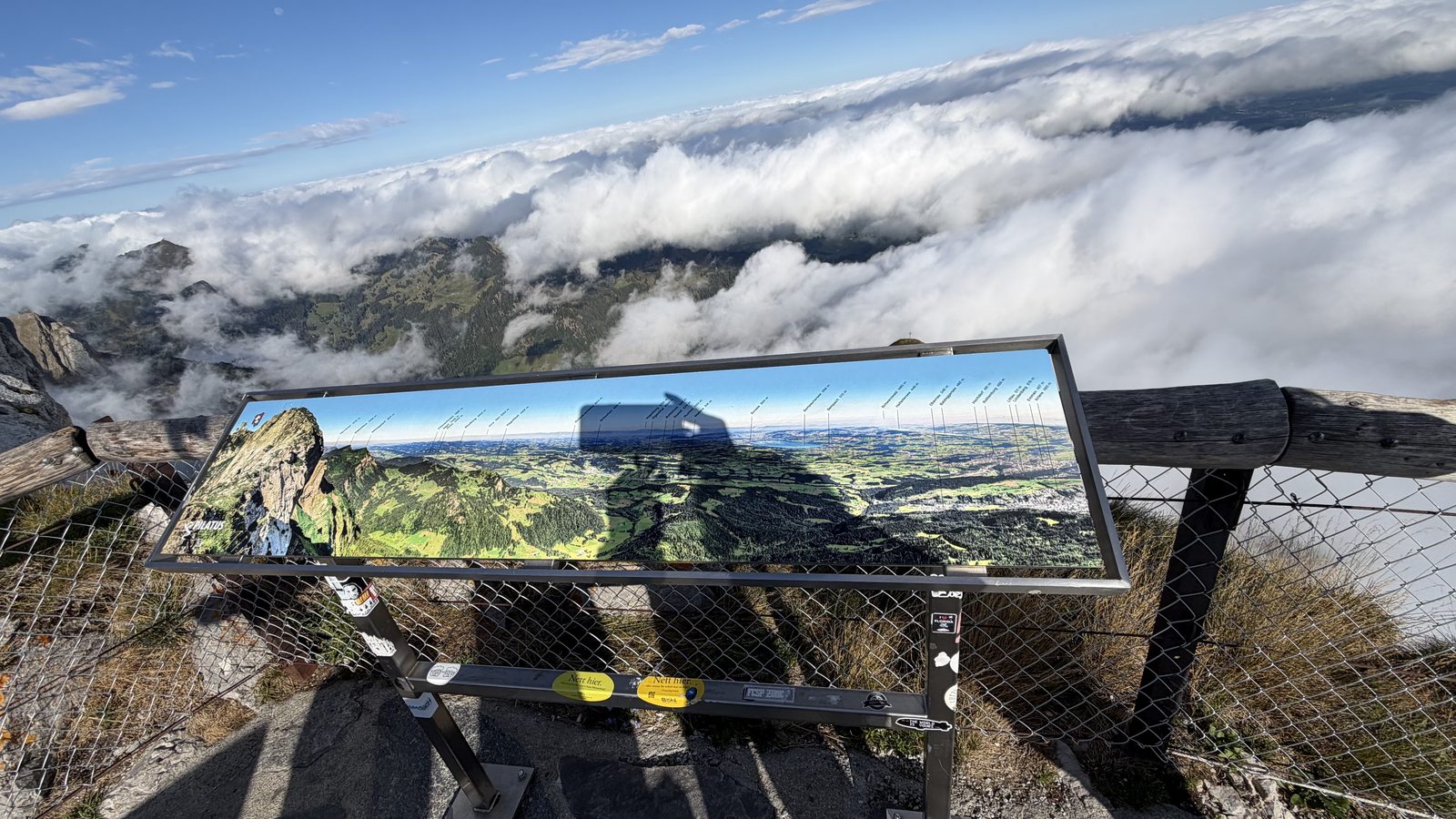 The summit panorama board. The ticket runs all day; only the seat slot on the way up is timed. Photo: RewardsGuru.club
Two more things before you buy. The cog runs every 35 minutes, so a missed departure is a wait rather than a disaster. And the descent to Kriens is never reservable, so the way down needs none of the planning the way up does.
Lockers and bags
We collected our bags from the hotel after coming down, not before going up. That is the small mechanic that lets a summit morning and a travel afternoon be the same day. Hotels hold bags free after checkout, and Swiss station lockers are cheap, CHF 12 for a large one at Zurich HB and CHF 7 at Montreux. Visp sells out mid morning, so that one is not a plan. The alternative is carrying two rollers up a mountain, which is not an alternative.
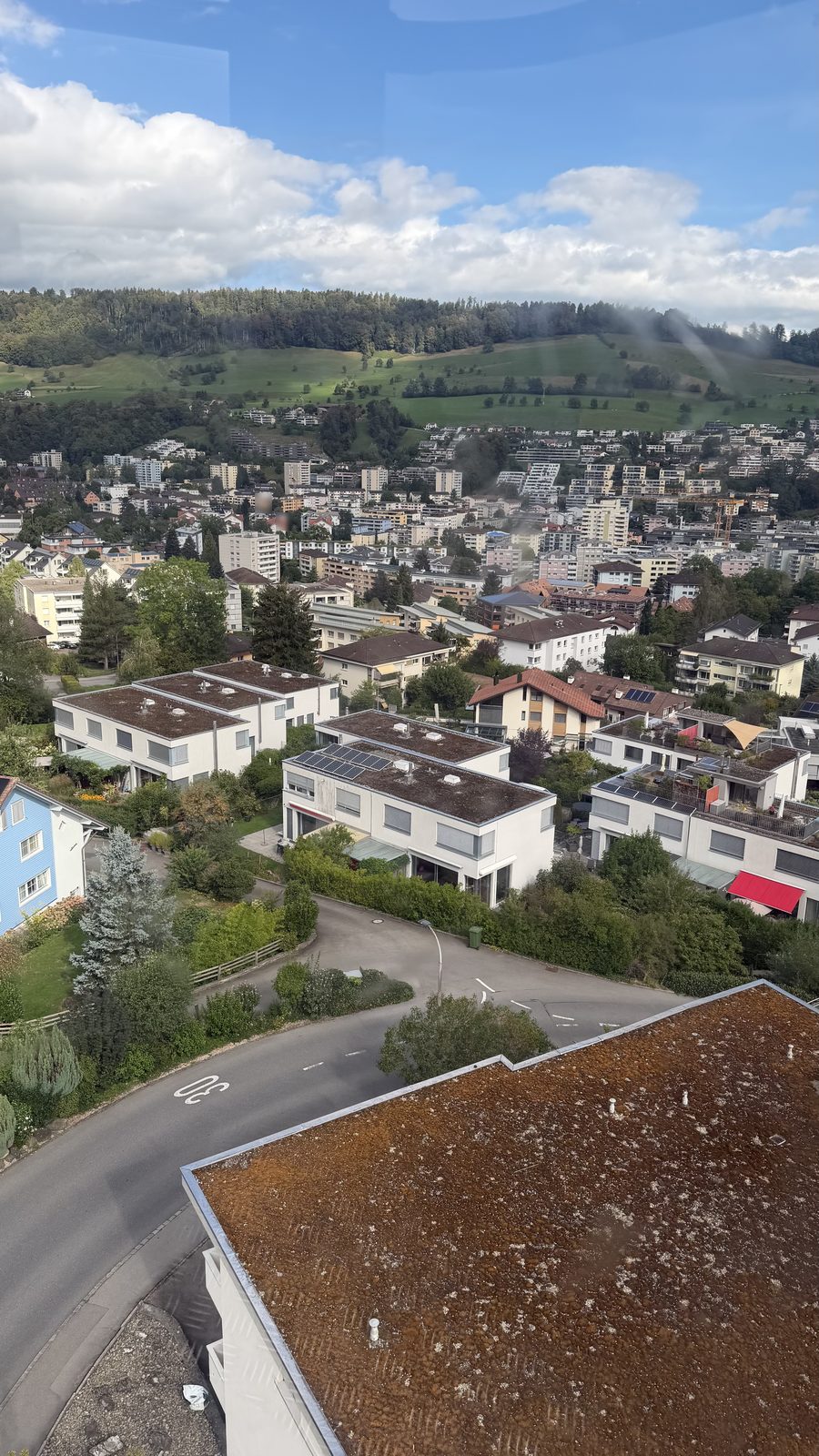 Dropping into Kriens. The bags stayed at the hotel until after the mountain, which is what lets one day hold both. Photo: RewardsGuru.club
The train east, and which side to sit on
Lunch happened at Luzern station, upstairs. Then we missed the 13:06 Luzern to Interlaken Express and took the 14:06 instead, which is the identical train an hour later.
That is the whole argument for regular point to point fares over Supersaver fares. Supersavers carry a percentage badge, lock you to one named train and do not refund. A regular fare is valid on the route all day, so a missed train is a shrug. Only two departures on our entire ten day trip could not be repeated: one panorama train with paid reserved seats, and the award flight that started the trip.
For the ride, sit on the right for Meiringen. The train reverses at Meiringen, which puts you on the left for Lake Brienz without moving seats. Right means facing the direction of travel, never the side you boarded from. At Luzern's dead end platforms, walking away from the concourse is the direction of travel.
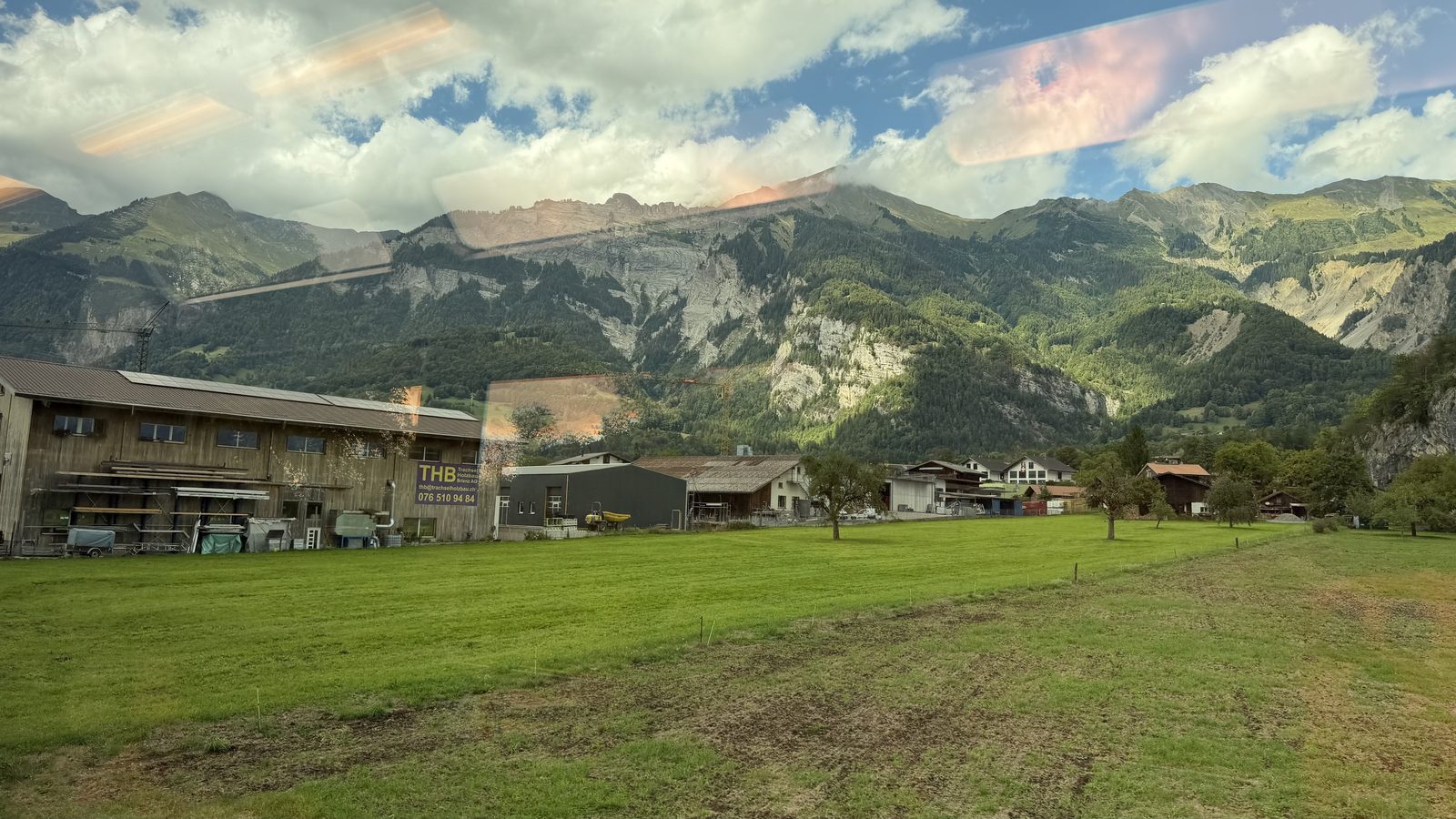 Lake Brienz after the reverse at Meiringen. Sit right out of Luzern and the lake arrives on your side without moving. Photo: RewardsGuru.club
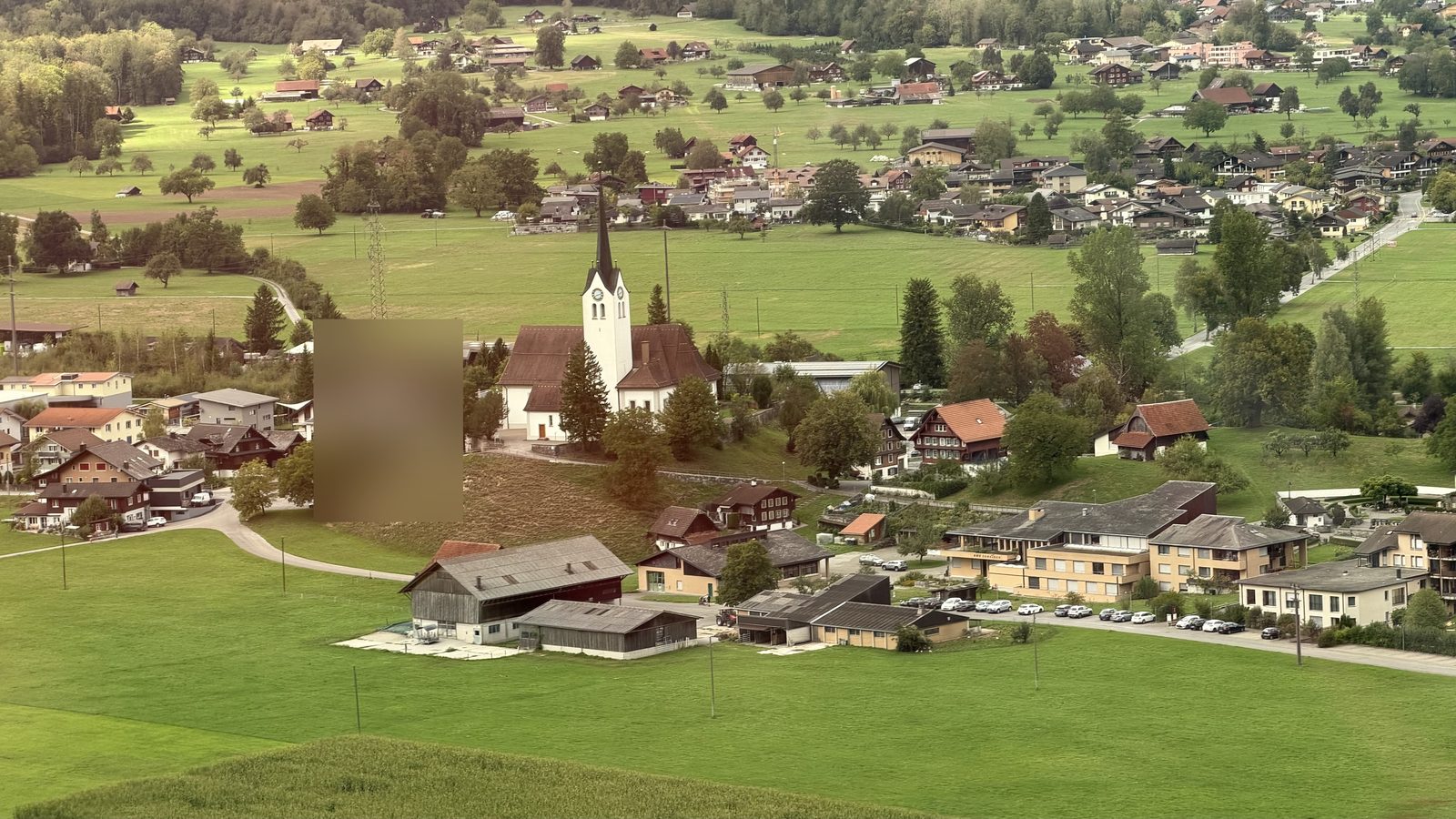 The valley near Giswil, earlier on the same line. A regular fare is valid on this route all day, so the next train is always an option. Photo: RewardsGuru.club
The mistake: we went to the wrong town
Our booking said Hotel Bernerhof. The trip plan we had generated with an AI assistant said the hotel was in Grindelwald, and said it twice. The hotel is in Interlaken, on Bahnhofstrasse by Interlaken West.
The assistant was not hallucinating, which is the part worth knowing. There are two Hotel Bernerhofs in the Jungfrau region, one in Interlaken and one in Grindelwald, about twenty minutes apart by train. They are not the same brand and not two properties of one group. They are unrelated hotels that happen to share a name, with separate websites at bernerhof-interlaken.ch and hotel-bernerhof-grindelwald.ch, and the Grindelwald one carries its own listing with Grindelwald Tourismus. That distinction is what makes this worth a warning. Two hotels inside one group share a booking engine that would raise the ambiguity at checkout. Two independents do not: separate owners, separate reservation systems, and nothing anywhere in the flow that asks whether you meant the other one. A name that resolves to two villages in one valley system is a trap anyone can walk into, and we did.
We found this out the way you would expect. We rode up to Grindelwald, found no hotel of ours there, and rode back down. It cost about an hour and the afternoon plan, which was Harder Kulm.
The root cause was not the AI. The root cause was that we booked a brand name and never checked the town on the confirmation email. Bernerhof is a common Swiss hotel name, and every step after the booking inherited the error because nothing in the plan ever went back to the source.
The rule we made on the spot and used for the rest of the trip: cross verify the town and the property name on every confirmation, not the brand. It caught three more. The Victoria we had booked was in Menaggio, not the Royal Victoria in Varenna. The Moxy was at Malpensa Terminal 2, not Linate or the city. The Novotel was at Roissypôle, not one of the other Paris Novotels.
Anything an assistant writes for you is a draft of your trip. The confirmation email is your trip.
Two silver linings, and we will take them. The Jungfraujoch day got rebuilt from Interlaken, which handed us a descent through Lauterbrunnen the original plan had skipped. And the panorama train two days later left from our doorstep.
Where to stay, with hindsight
Hotel Bernerhof, Interlaken, two nights, paid in cash.
Set expectations before you book: this is a location purchase, not a comfort one. The rooms are very basic and breakfast is not a reason to choose it. What you are buying is the address, and on these days the address is the whole game. That is the part to optimise for on the Jungfrau days. Interlaken beats Grindelwald as a base if you are doing more than one thing in the region, because both valleys run from Interlaken Ost and the panorama trains west leave from there too. Grindelwald wins only if the mountain above it is the entire plan.
Where we ate
Lunch was at Luzern station, between the mountain and the train. That is the right call on a summit day. You are at the station anyway, and you are not paying summit prices for it.
Dinner was at Restaurant Taverne, near Interlaken West, on the first night.
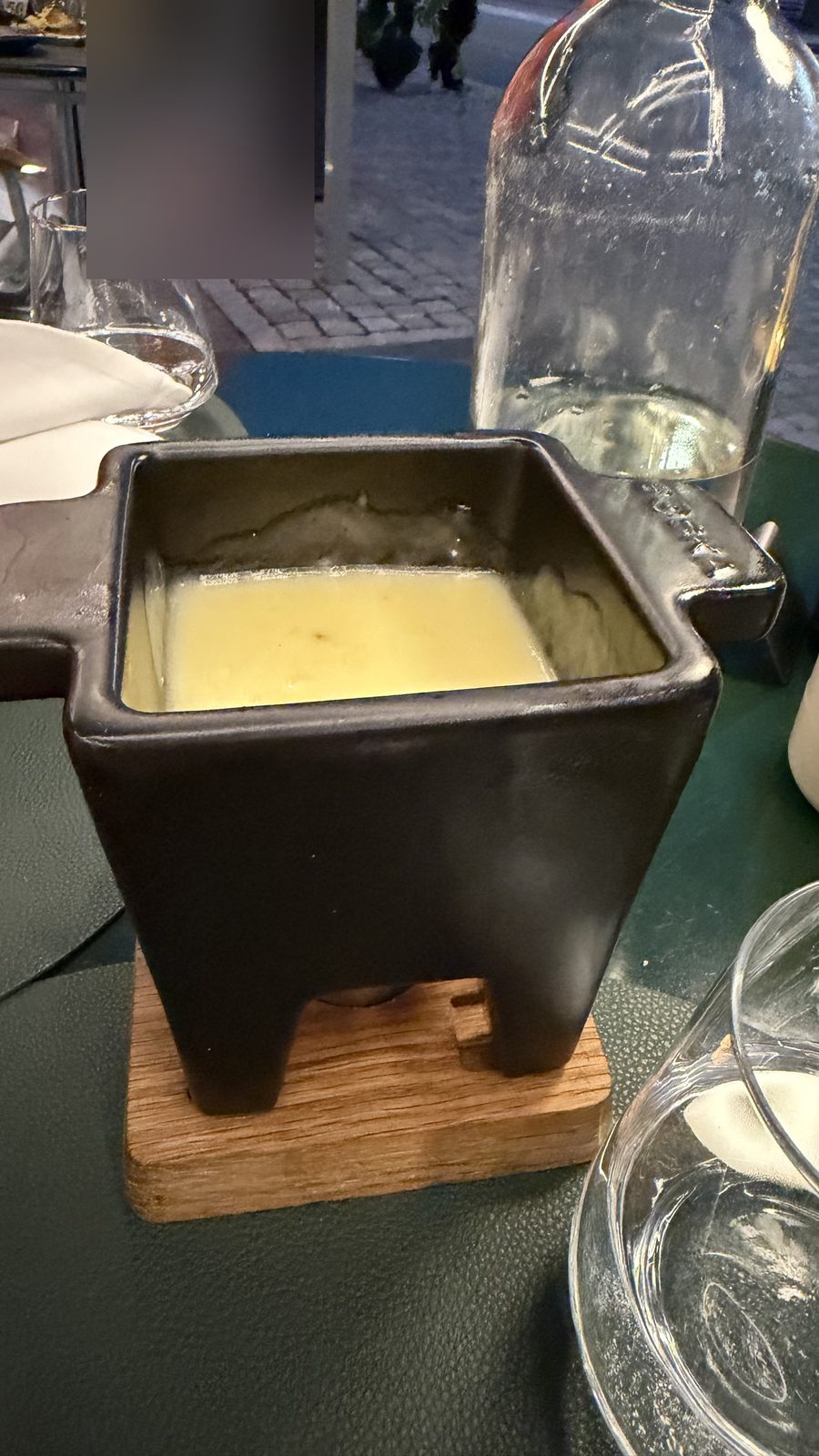 Dinner in Interlaken, which is the town the booking actually named. Photo: RewardsGuru.club
One thing to plan around. Monday closes the bakeries. Not some of them, all of them. If your breakfast plan is a bakery and your travel day is a Monday, you do not have a breakfast plan.
Useful tips
- Pick the mountain off the webcam the night before, then book. Summit tickets do not refund for weather, so the webcam is the only insurance there is.
- Check the VILLAGE on a Swiss hotel booking, not just the name. Two Hotel Bernerhofs operate in the Jungfrau region, Interlaken and Grindelwald. Confirm the street and the nearest station before you travel.
- Price the Saver Day Pass against your actual point to point half fare total every single morning. It is dynamic, and it loses as often as it wins.
- Take the first departure up any mountain. Better light, fewer people, and weather insurance built in.
- On any day with connections, buy regular fares, not Supersavers. The next train is usually 30 to 60 minutes away and a regular ticket lets you take it.
- Read the town on every hotel confirmation before you plan a single connection around it. Brand names repeat across Switzerland.
Next: what a Jungfraujoch ticket actually covers, and the leg it does not.
Part of a free series. Ten days in Europe on premium credit cards, 10 daily guides and a closing ledger, with the receipts and the mistakes left in. Itineraries like this sell as $10 downloads. Ours is free because the bill is not yours to pay. The site earns from affiliate links to tools and retailers. The card links in it are personal referral links, which can earn points rather than a commission, and we run no card affiliate programme at all.
If you want the rest as it lands, follow on Threads, Instagram or TikTok. We take one thing apart properly at a time.
Booked and paid as described. No names, no faces, our own photos only.
Related articles
- Day 2 in Lucerne: the 7:22 out of Paris, the Rhine Falls between two trains, and the card we had to ask for
- Day 1 in Paris: a late landing, the Arc and the tower on foot, and what the FHR night paid
- Day 0, getting there: 30,000 points, three lounges and a massage chair
- Ticks and Lyme disease in Switzerland: do you need to worry, and what we packed for the mountain days
Do this with your own numbers
- Purchase optimizer — run your own spending through the same numbers this article used
- Bonus tracker — today's welcome bonuses, verified on the issuer's page