Jungfraujoch is the most expensive single ticket most people buy in Switzerland, and it is the one that will not give your money back if the mountain is in cloud. That is the real question. Not whether the view is good. Whether you hand over that much for a view you cannot check in advance and cannot rebook.
We went up on Day 4 on half fare. Here is the receipt, and the routing decision that turned one ticket into two valleys.
What the day cost
| Interlaken Ost up to Jungfraujoch, half fare | CHF 68.90 per person |
| Jungfraujoch down to Lauterbrunnen, half fare | CHF 64.20 per person |
| Summit tickets, both of us | CHF 266.20 |
| Two Swiss Half Fare Cards, whole trip | $370 |
| Bus 141, Lauterbrunnen to Trümmelbach and back | about CHF 2.20 per person each way |
| Trümmelbach Falls entry | CHF 18 per adult, the operator's published price |
| Lauterbrunnen to Interlaken Ost, 18:10 | about CHF 5 per person, not covered by the summit ticket |
| Interlaken Ost to Interlaken West | CHF 0, guest card |
| Staubbach Falls | CHF 0, it is a footpath |
| Everything on the day beyond the summit ticket | about CHF 55 for two |
One note on that Trümmelbach line, because this series lives on receipts. We did not write down what we handed over at the gate, so rather than guess we are printing the operator's own published adult price, read on 17 September 2026. Every other figure in the table is what we actually paid.
Two things about the pair of fares at the top, because they are the useful part.
They are two separate tickets, not a return. We went up from Interlaken Ost and came down into Lauterbrunnen, a different valley, and the counter sold that as two one way legs rather than as one round trip. And the descent was the cheaper of the two. That is the practical reason the two valley routing is not a luxury: you are not paying a premium for the better way down, you are buying the second half on its own and it happens to cost less.
Both tickets were issued at "Reduced fare 1/2". That is worth saying plainly, because we had assumed the top of this mountain was where a half fare stops mattering. It is not. The card that halves your commuter train also reduced the fare to Europe's highest railway station.
We are not printing a full fare comparison. We did not record what these two legs cost without the card on the day, and a piece about half fare that guesses at the other half is not worth reading. The card price is in the table. Judge it against your own itinerary rather than ours.
The rule that decides the whole question
Standard Jungfraujoch tickets are date-locked, non-refundable and non-exchangeable. Weather is not an exception. If the summit is socked in on your date, you paid for cloud. Only the CHF 10 seat reservation can be moved.
So you are not buying a mountain, you are buying a date. The pattern that works is to keep the date loose, watch the jungfrau.ch webcams, and commit when the forecast is good rather than when the calendar says so. We used the same webcam-first pattern for Pilatus the day before and it bought a clear morning twice.
If you cannot be flexible on the date, price the ticket as a coin flip, because that is what it is.
We converted the ticket at the counter, and it gifted us a valley
Our ticket was bought against a Grindelwald base, because our hotel booking said Grindelwald. The hotel was in Interlaken. We found that out the previous evening, after riding up to Grindelwald and back down.
The counter at Interlaken Ost rebuilt it from an Interlaken base instead. Worth knowing on its own: the base station is not welded to the fare the way an online purchase makes it look.
The rebuilt route was better than the one we had planned. Up via Grindelwald and the Eiger Express, down via Lauterbrunnen on the Wengernalp cog through Kleine Scheidegg and Wengen. The original plan went up and down the same side and never saw Lauterbrunnen.
Our booking mistake produced the better itinerary. We did not find it by being careful. We found it by being wrong and having to rebuild.
The tip, separated from our luck: a Jungfraujoch return does not have to be there-and-back. Ask for up one valley, down the other. Same fare, two different descents.
Three ways up, and the one that skips the best junction
Jungfrau Railways publishes three routes to the top, and the difference between them is not speed.
| Route | Shape |
|---|---|
| Eiger Express | Interlaken Ost — Zweilütschinen — Grindelwald Terminal — Eigergletscher — Jungfraujoch |
| Via Grindelwald | Interlaken Ost — Zweilütschinen — Grindelwald — Kleine Scheidegg — Eigergletscher — Jungfraujoch |
| Via Lauterbrunnen | Interlaken Ost — Zweilütschinen — Lauterbrunnen — Wengen — Kleine Scheidegg — Eigergletscher — Jungfraujoch |
Read the first row against the other two. The Eiger Express does not call at Kleine Scheidegg at all. It is a gondola that lifts you from Grindelwald Terminal straight to Eigergletscher, where you join the railway for the tunnel. It is the fast way up, and it skips the prettiest junction in the region.
Which is the argument against riding it twice. Both our tickets carried the choice on their face: the way up reads "via Lauterbrunnen or Grindelwald Terminal — Eigergletscher", the way down reads "via Wengen or Grindelwald Terminal". Either valley, either direction, already on the fare.
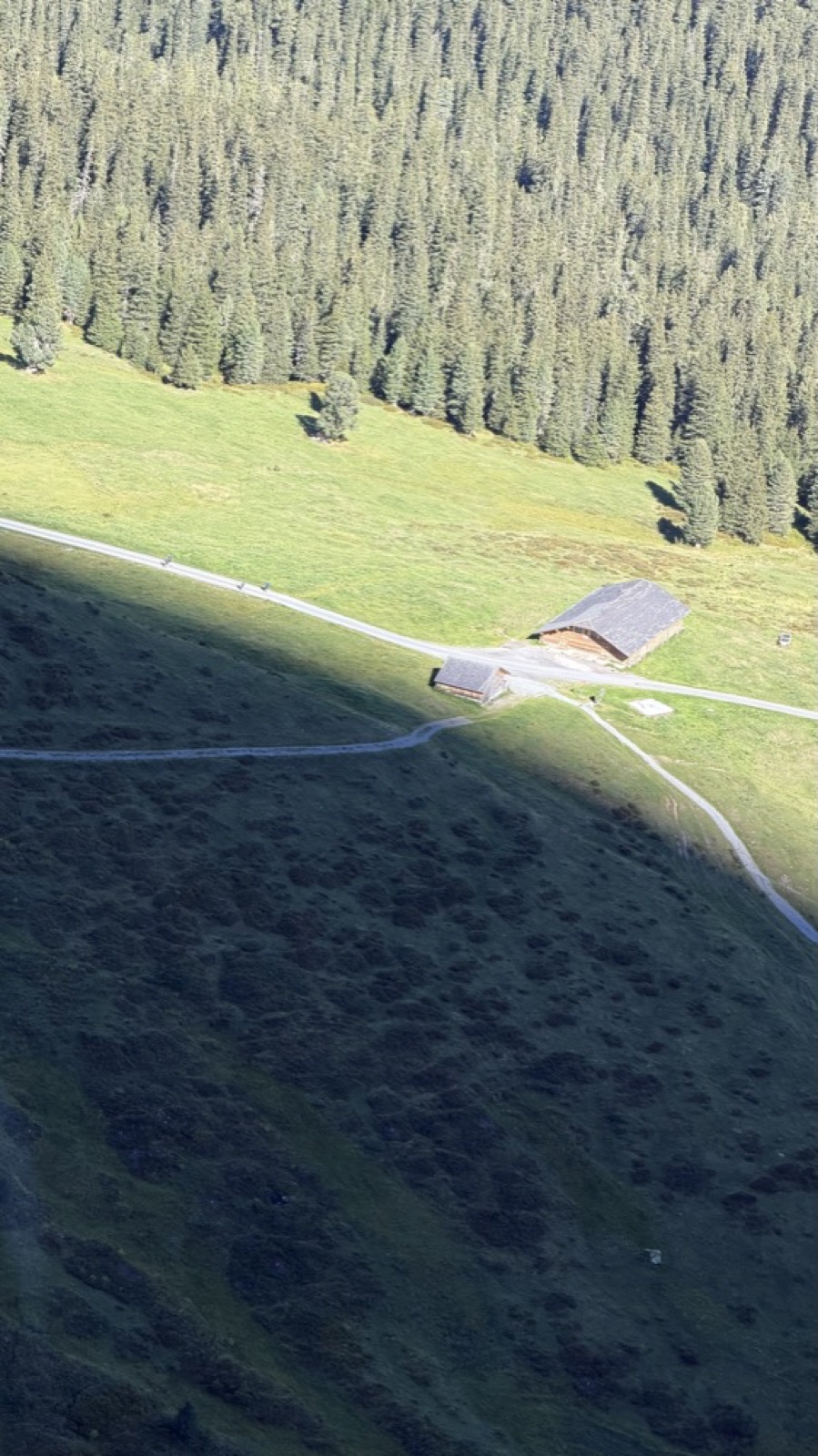 Hanging above the meadows on the Eiger Express, the fast way up that skips Kleine Scheidegg. Photo: RewardsGuru.club
The 9:04, and what the fare stops covering
We took the 9:04 from Interlaken Ost. At 3,454 m the three things people go for are the Sphinx terrace, the snow plateau and the Ice Palace cut into the glacier.
We did not stay long at the top, and we did not queue for the Sphinx lift on the morning we went.
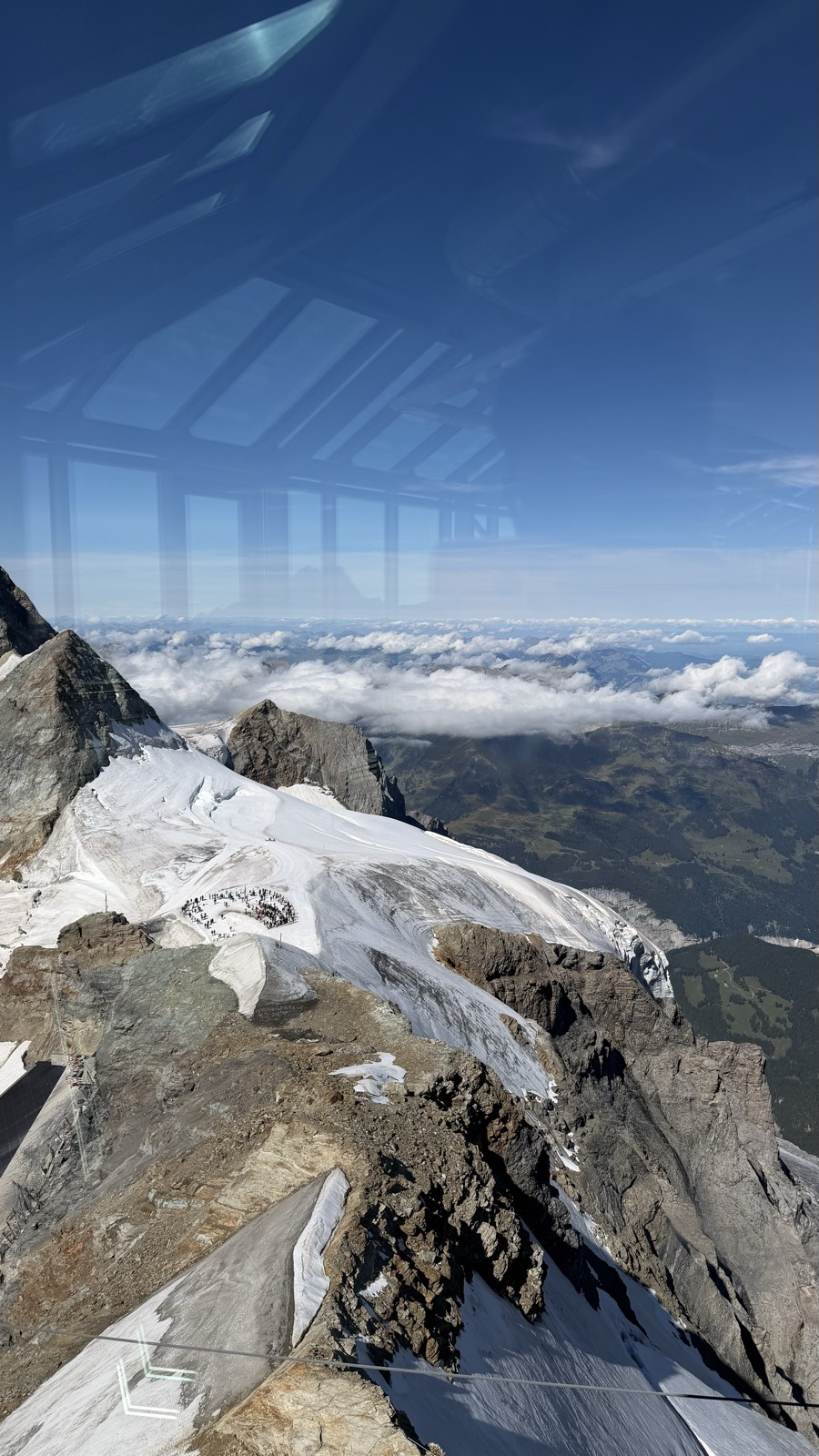 From the observation deck. Everything under the cloud line is the country you came from. Photo: RewardsGuru.club
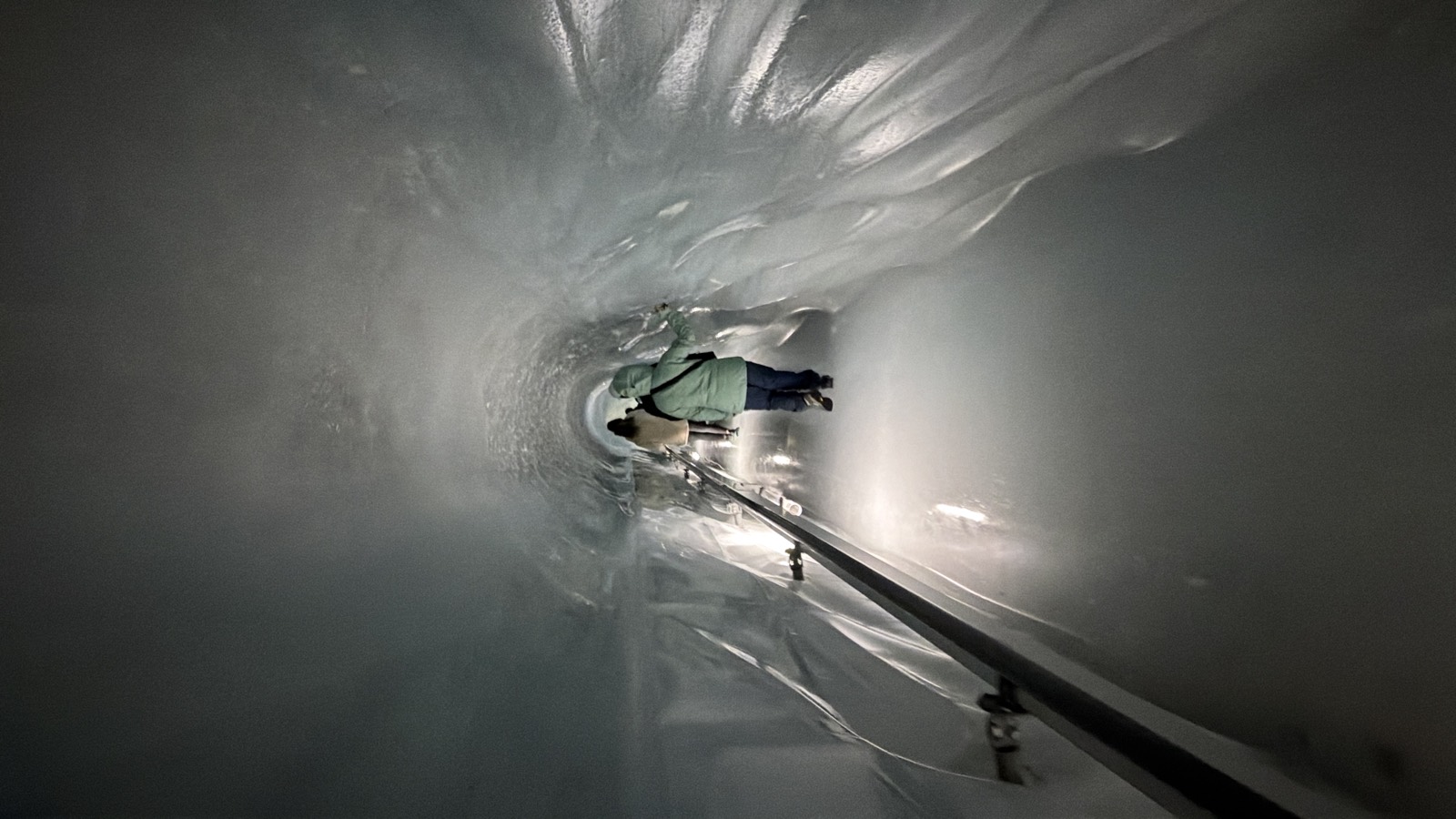 The tunnels are cut into the glacier rather than built. Photo: RewardsGuru.club
The Ice Palace is included in the Jungfraujoch ticket, so there is no reason to skip it. Mountain guides cut the aisles and halls into the Jungfraufirn with picks and saws in the 1930s; the sculptures in them are carved by artists now.
Two practical things. Jungfrau Railways describes the route through it as "mirror-smooth", and that is not just a figure of speech: the floor is wet and polished, and it wants slow feet and a hand near the rail. And it is below freezing in there year round, on a day that probably started in a green valley.
Do not plan on that. Jungfrau Railways sells a paid seat reservation for CHF 10 and says of it: "For the journey to the Jungfraujoch, we strongly recommend a paid seat reservation in good weather," listing it as "Recommended to avoid waiting times." Read the condition in that sentence, because it is the whole tip. A clear forecast is exactly what puts everyone else on your train, so the CHF 10 is most worth paying on the day the ticket itself is most worth using. We got a short line. Somebody on the next clear morning in August will not.
Day 4 was clear at the top. No cloud, no whiteout, and a full view down the longest glacier in the Alps, which is the thing the railway sells and the thing a bad morning takes away.
That is the entire verdict on this ticket. A Jungfraujoch fare buys you an altitude, and an altitude only pays in visibility. We got the morning people pay for. So read every "worth it" answer to this question, ours very much included, as a verdict on one morning's sky rather than on the excursion itself.
We came down into Lauterbrunnen at about 13:45.
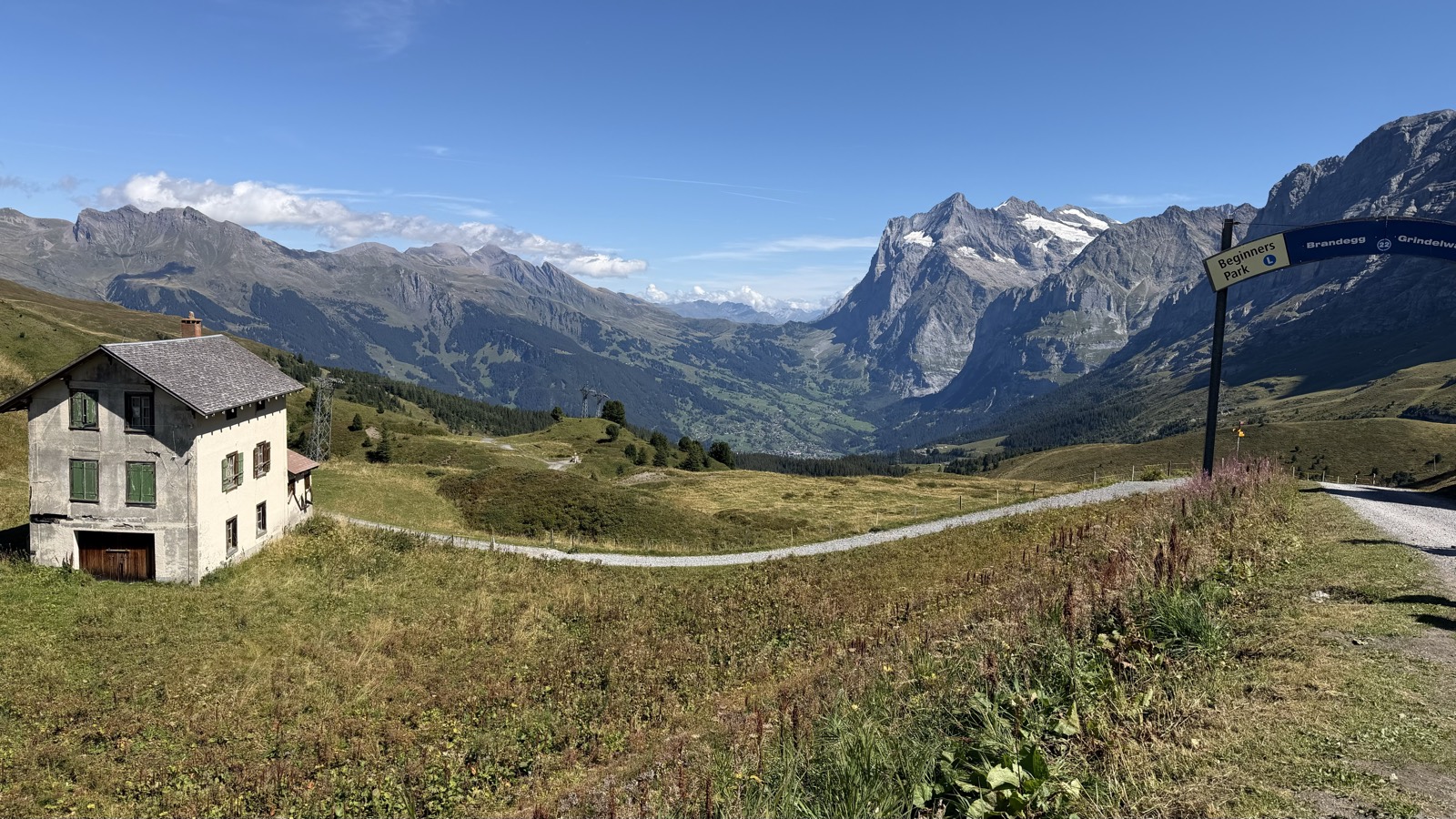 Kleine Scheidegg, looking across to the Grindelwald side. The junction the Eiger Express skips on the way up. Photo: RewardsGuru.club
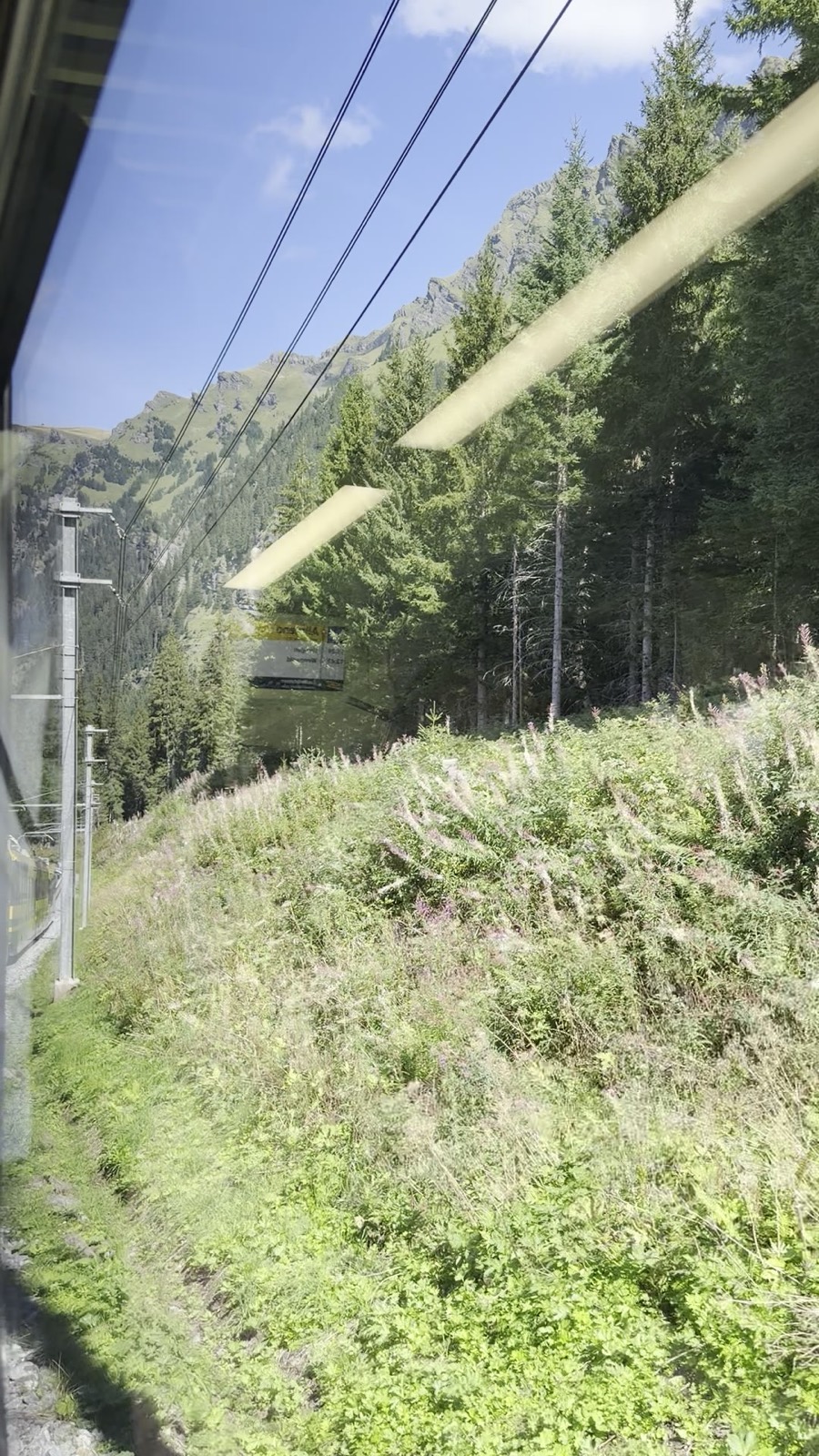 The Wengernalp cog on the way down to Wengen. This leg is the reason not to ride the Eiger Express in both directions. Photo: RewardsGuru.club
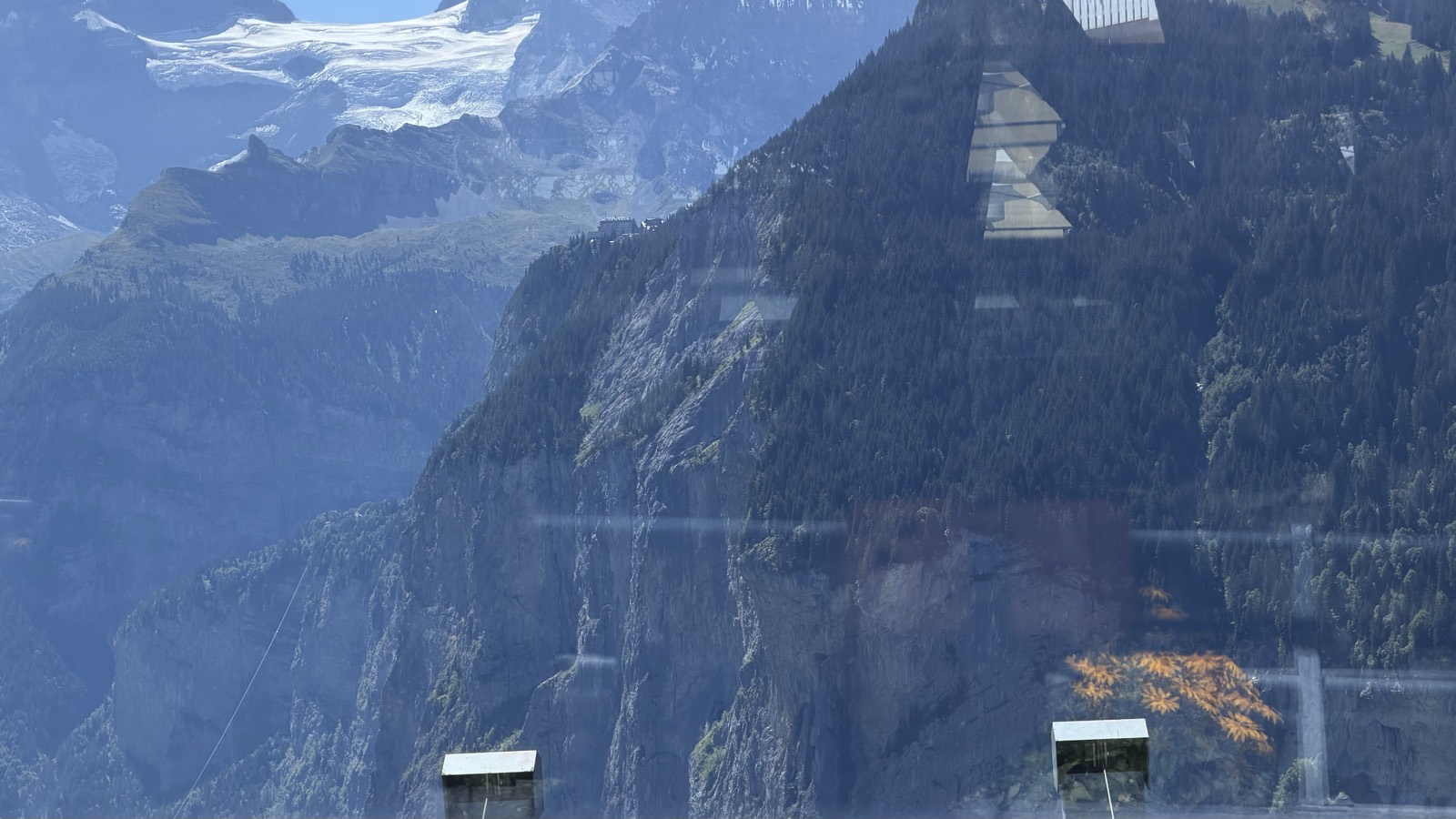 The Lauterbrunnen wall on the descent. The half of the region you never see if you ride one valley twice. Photo: RewardsGuru.club
The 18:10 back to Interlaken Ost was not covered by the Jungfraujoch ticket, and we bought it separately at about CHF 5 per person. Small money, and that is the point: it is exactly the leg people assume sits inside a big ticket. Check where your summit fare actually ends. Ours ended at Lauterbrunnen.
Interlaken Ost to Interlaken West cost nothing, on the guest card that comes with a Jungfrau region overnight stay. Any Swiss overnight comes with a local card of some kind. Ask at check-in if it is not handed over, because the transport it covers is real money.
The one thing at the top that is cheaper than it should be
There is a Lindt shop at 3,454 metres. Jungfrau Railways calls it Lindt Swiss Chocolate Heaven, describes it as "The highest Lindt shop in the world", and it is open 365 days a year. Budget about ten minutes.
The name is not marketing filler. The shop tells the story it is named for: Rodolphe Lindt spent years trying to make chocolate taste better and got nowhere, left his machine running over a weekend, and came back to find "the crumbly cocoa-sugar mixture had become a delicately melting crème." That accident is conching, and it is why Swiss chocolate feels the way it does in your mouth.
Here is the part worth acting on. Everything at altitude is marked up — the coffee, the sandwich, the souvenir. The chocolate is not. We paid about CHF 6.50 per 100 g, below what we saw the same bars going for in tourist shops down in the valley towns and the cities. That is the opposite of how a captive summit normally works, and the likeliest explanation is the dull one: it is a brand-operated outlet rather than a concession charging whatever the mountain will bear.
One caveat so this does not get over-read. Our comparison was against tourist shops and city-centre shops, not against a Coop or a Migros. A supermarket in the valley will still beat a mountain. But among the things you can buy at the top, it is the only one we would tell you to buy on purpose.
The afternoon in the valley
The valley floor holds two famous waterfalls about three kilometres apart. We saw both in the same afternoon and they were in completely different moods. That turns out not to be luck, and it is the most useful thing we learned all day.
Staubbach Falls drops beside Lauterbrunnen village and costs nothing. Lauterbrunnen Tourism calls it "297 metres — The highest free-falling waterfall in Switzerland", and that qualifier is load-bearing: free-falling. Other sources rank it third in Switzerland by total height, which counts cascades rather than an unbroken drop; both are true of different measurements. Switzerland Tourism puts a round trip from the village at about 30 minutes, and the path to the base "is only open in summer".
Now the part that matters. Lauterbrunnen Tourism says Staubbach "is at its most powerful in spring and early summer, when meltwater from the surrounding mountains feeds the cascade." We were there on 1 September. It was a wisp.
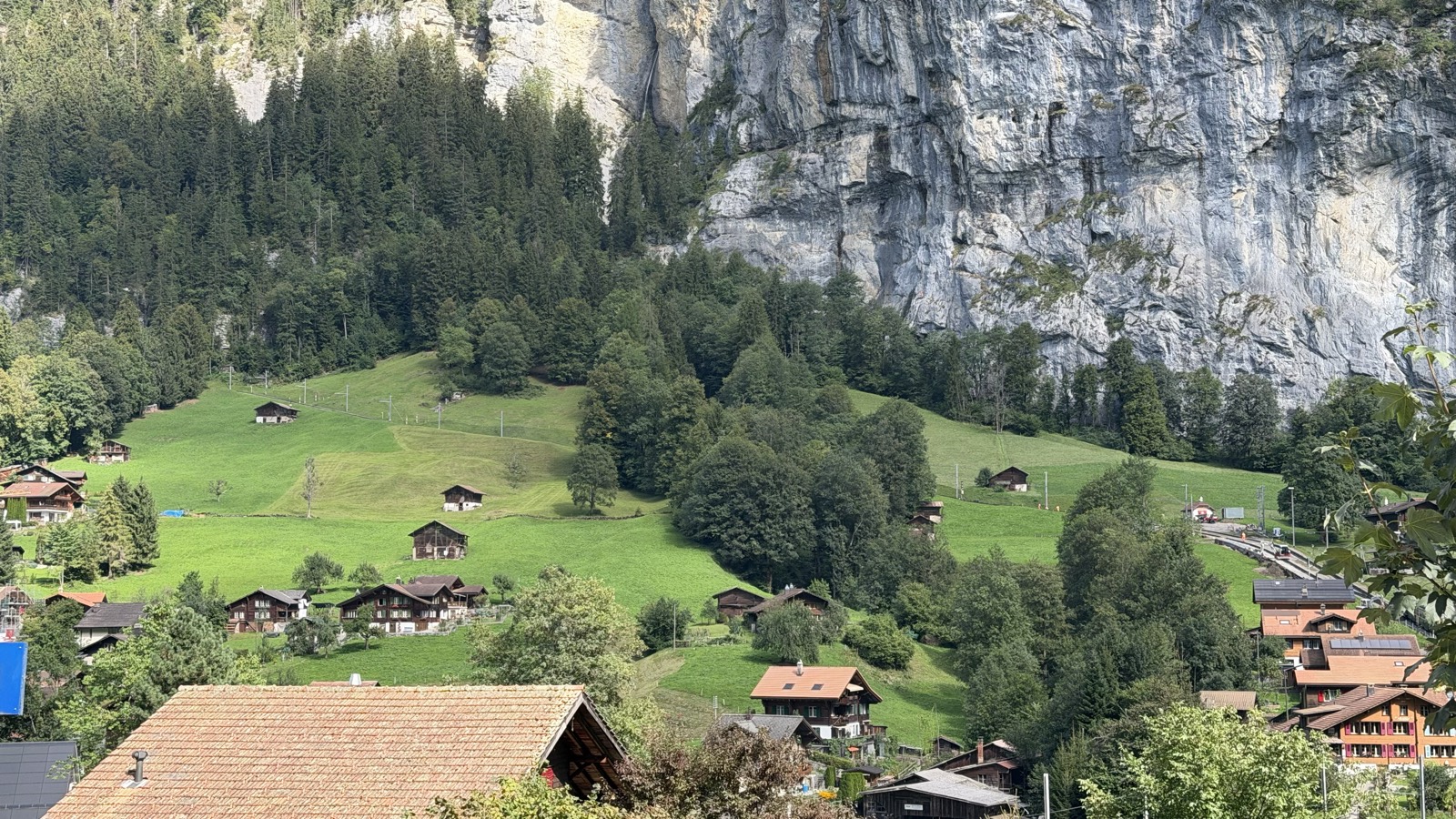 Staubbach in the first days of September, the thin white line on the rock. Snowmelt season is long over. Photo: RewardsGuru.club
Three kilometres down the valley, Trümmelbach Falls was thundering, and the mechanism is different. Its operator describes "ten glacial water falls inside the mountain, made accessible by tunnel lift", draining "the enormous glacial walls of the Eiger (3970m), Mönch (4099m) and Jungfrau (4158m) with up to a spectacular 20,000 litres of water per second."
Snowmelt is spent by September. Glacier melt is not.
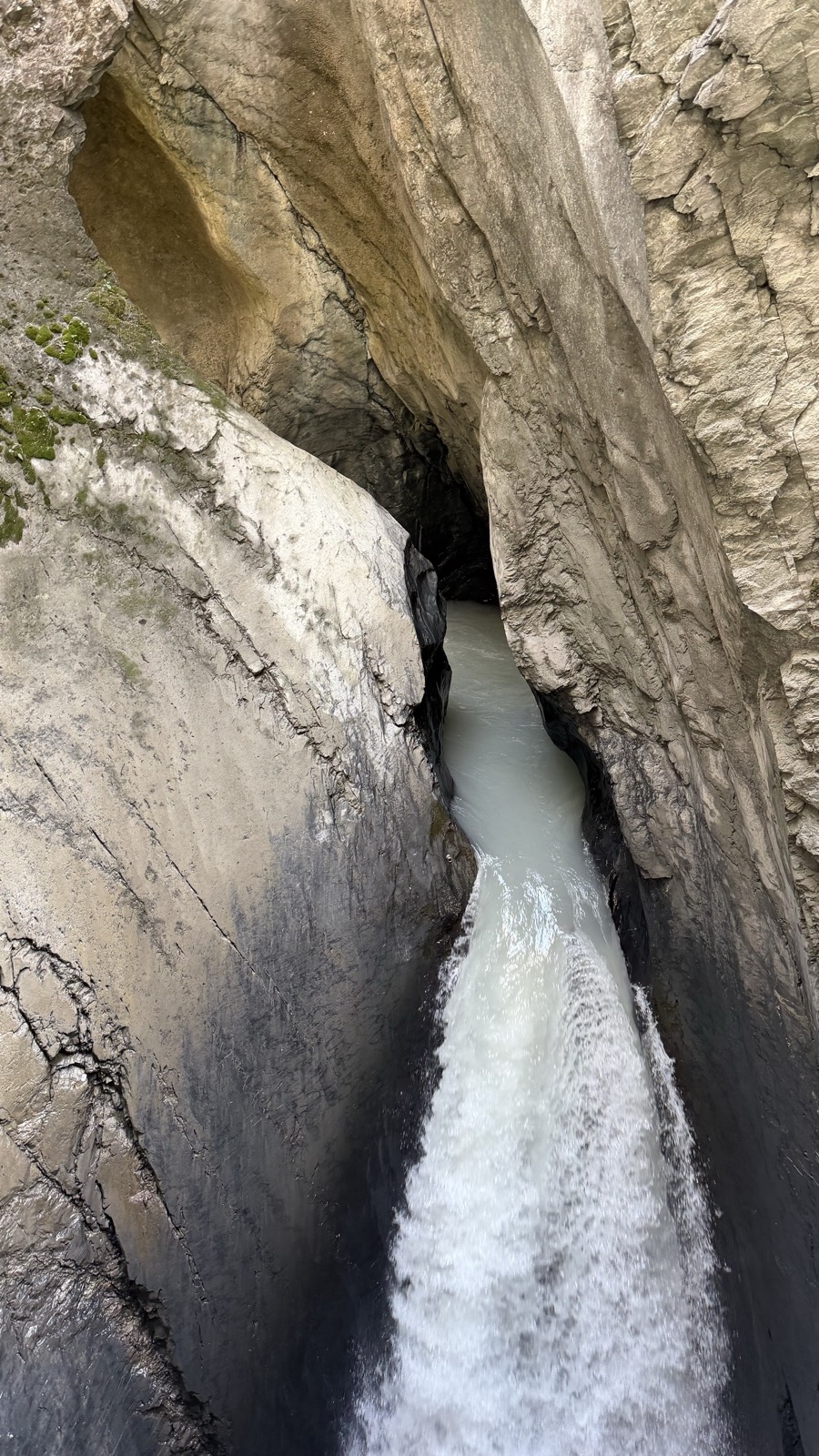 Trümmelbach the same afternoon, an hour after Staubbach. Different water, different season, three kilometres apart. Photo: RewardsGuru.club
So the two waterfalls peak at opposite ends of the summer, and a visitor arriving in late season who budgets only for the famous one gets the quiet one.
A detail we liked: the name describes a sound, not a sight. Per the operator, Trümmelbach is Trommelbach, drum stream — and until the mountain was first opened up in 1877, every fall except the lowest was hidden inside the rock.
Trümmelbach, practically
| Admission | CHF 18 adult; CHF 8 child 6–15. The operator states it offers no group prices |
| Rail pass discount | none published on the operator's price page |
| Season | early April to early November, weather depending |
| Hours | 9:00–17:00 daily; 8:30–18:00 in July and August |
| Getting there | train to Lauterbrunnen, then bus 141 to the Trümmelbachfälle stop |
| Not permitted | children under 4, and dogs — stated as a safety rule, not a preference |
| Tunnel lift | running on our visit — it is the way in to most of the falls, not a shortcut |
| Prices as of | the operator's own site, read 17 September 2026 |
That admission is its own small lesson: it is a gate price, it is not on any rail product, and your Half Fare Card does not touch it. The operator also warns to check exact times at the start and end of the season, and says plainly that it accepts no responsibility for a wasted journey.
Drone owners: Lauterbrunnen is a named no-fly zone in the Jungfrau Region Tourism rules, and being under 250 g does not exempt you. Ours stayed in the bag. The sub-250g class is treated as a free pass in most countries. It is not a free pass against a named local ban.
Where to stay, with hindsight
We slept in Interlaken, at the Hotel Bernerhof, and it worked for the Jungfrau days even though we ended up there by accident. Judge it on the address rather than the room: rooms are very basic and breakfast is not a reason to book, but Interlaken West put us a short walk from the station that runs these days. If you book it, check you have the Interlaken one. There is an unrelated hotel of the same name in Grindelwald.
Interlaken over Grindelwald, for these days. Interlaken Ost is where the network converges: the 9:04 to the summit, the Lauterbrunnen descent and the next morning's departure all used the same station. Grindelwald is closer to the mountain and further from everything else.
Where we ate
Lunch was on Auf der Fuhren in Lauterbrunnen. We ate at Restaurant Schützen. The thing to understand about eating in Lauterbrunnen is the shape of the place rather than any one kitchen: it is a small village at the bottom of a railway that delivers a whole mountain's worth of hungry people into it within the same hour, and the menus are priced for that. You are paying for where you are and when you got there. Treat lunch in the valley as refuelling and budget it accordingly, or eat before you come down if a memorable meal matters more to you than the timing.
Useful tips
- Buy the summit ticket for the weather, not the calendar. Non-refundable even for cloud, and only the CHF 10 seat reservation moves.
- Book it as two singles in the SBB app, up one valley and down the other: Eiger Express up, Wengernalp cog down. Two one way tickets rather than a return, and you do not need a ticket counter to do it. Ours were CHF 68.90 up and CHF 64.20 down per person, so the scenic descent cost less than the way up, not more.
- A base station chosen online is not final. A counter agent rebuilt ours from a Grindelwald base to an Interlaken one.
- Assume the summit ticket ends where the mountain railway ends. Lauterbrunnen to Interlaken Ost was ours to buy.
- In September, reach Trümmelbach before about 16:30. That is last entry, not closing, and the gate is CHF 18 an adult that no rail pass discounts.
- Match the waterfall to the month. Staubbach runs hardest in spring and early summer on snowmelt; Trümmelbach runs on glacier melt and is still heavy in September. Late in the season the less famous one is the better visit.
- Buy the chocolate at the top. Lindt Swiss Chocolate Heaven is, in Jungfrau Railways' words, "The highest Lindt shop in the world", and at about CHF 6.50 per 100 g it priced below the tourist shops we saw down in the valley towns and the cities. That is the opposite of how altitude normally works, so compare one bar before you assume the summit is the expensive place to buy. Läderach, in the towns, is the other Swiss chain worth walking into.
Next: the GoldenPass Express in Prestige seats, and whether CHF 49 per person buys anything you can feel.
Part of a free series. Ten days in Europe on premium credit cards — 10 daily guides and a closing ledger, with the receipts and the mistakes left in. It starts on Day 0, with the award flight that got us there. Itineraries like this sell as $10 downloads. Ours is free because the bill is not yours to pay. The site earns from affiliate links to tools and retailers. The card links in it are personal referral links, which can earn points rather than a commission, and we run no card affiliate programme at all.
If you want the rest as it lands, follow on Threads, Instagram or TikTok. We take one thing apart properly at a time.
Booked and paid as described. No names, no faces, our own photos only.
Related articles
- Day 3 of 10, Pilatus: the steepest cogwheel, and a hotel in the wrong valley
- Day 2 in Lucerne: the 7:22 out of Paris, the Rhine Falls between two trains, and the card we had to ask for
- Day 1 in Paris: a late landing, the Arc and the tower on foot, and what the FHR night paid
- Day 0, getting there: 30,000 points, three lounges and a massage chair
Do this with your own numbers
- Purchase optimizer — run your own spending through the same numbers this article used
- Bonus tracker — today's welcome bonuses, verified on the issuer's page